Showing posts with label gardening. Show all posts

Thursday, February 27, 2025

Completing the First Winter Garden Project

Winter was passing quickly . . . and then slowly . . . and now is it speeding up again? Winter garden projects are progressing . . . steadily. I suppose that's the way it goes; it goes the way our attention goes, whether the enjoyment of the moment or the anticipation of the future. I'm finding my best remedy for winter blues is work--working on my physical well-being by riding my inside smart bike and walking on our treadmill; and by planning and executing my winter garden projects. About six weeks ago I wrote my last blog gardening post: 
"Planning Next Year's Garden During a January Winter Storm," where I laid out a series of winter garden projects for myself. Let's see how I'm doing on that list.

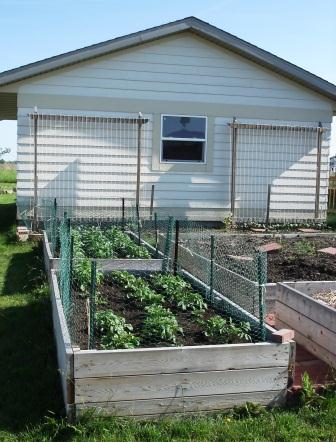
This spot in the garden has been my first planting, three days ago. I planted French Breakfast radishes, spinach, arugula, kale, a lettuce blend, claytonia (miner's lettuce), mache, Creme de Brulee shallots, and tatsoi. Below I've included three photos, before and after shots of the cold frame situated on the south side of the garage, and then the planted area.

Cold Frame, about 18 years old

Cold frame rebuilt with new bottom 2x4 and new plastic

Planted cold frame

I've added a new cedar 2x4 to the bottom of the cold frame, replacing the old, rotted wood, and have added new plastic to the lid. I also have sealed the wood (after around eighteen years!) with a food-grade safe sealer. I tried the "square-foot gardening" planting strategy this year, including three new cold-weather crops: mache, tatsoi, and clatonia. It's never for sure how the plants will do, especially with new crops, but we'll see! A last cold snap is coming in three days, so I plan to cover the cold frame with a blanket that night.

This project is now complete, and I hope I will be eating salad greens from this small plot by the end of March if not sooner. And now on to two other projects, planting indoors using a grow light and building some covered hoop frames for the main garden.

Follow by Email

* indicates required

Monday, January 6, 2025

Planning Next Year's Garden During a January Winter Storm


I use writing as a means of organizing my thoughts; that is to say, some of my writing is in order to process my thoughts and discover what I know, rather than sharing what I already understand. Today is such a post. Last January, I was in the middle of teaching full-time, having come out of retirement at the request of my former school district to teach for one year, 4th Grade. Therefore, in the spring of 2024 I was pretty busy and pretty tired. I did manage to get some early vegetables planted, but I didn't engage in any early-season planting, utilizing season extending techniques such as row covers.

Here I am now, though, in the first week of January 2025. It's dawn and apt to snow today. I'm sitting by my woodstove, processing all the garden seed and materials research I've engaged in over the last couple of days. For our garden, my wife and I have always had to balance gardening utility with garden aesthetics because our garden space is not hidden behind a fence in a backyard. There aren't backyards with high fences where we live, due to the plan of our development and home owners' association covenants. Therefore, I've always striven to make our vegetable garden not only productive but also eye-pleasing. It hasn't been too difficult, and over the growing seasons, we've had many strollers pass by our garden and ooh and aah at our veggies.

I do tend to approach my kitchen garden more with the "micro-farm" philosophy than with the "seeds-to-weeds" philosophy, though. I enjoy the planning and maintaining just as much as the harvest. I also believe that a garden that includes cold frames, row covers, and that utilizes three-dimensional gardening (up and not just along) can still be beautiful. Researching and also considering aesthetics are key to maximizing garden beauty because then the garden displays both the beauty of the vegetables and the creativity and knowledge of the gardener.

Therefore, now that I've reminded myself of several big ideas, it's time to look at specifics.

South Garage Cold Frame

I built a cold frame about fifteen years ago, and it's currently situated a the south side of the garage. This is a good location, which is one of the warmest garden areas on our property. I plan to re-build the frame to strengthen it and then to use it for early food production. We always get our first eating out of that space--arugula and dwarf kale, but I want to try to get produce from that spot even earlier this year--perhaps three weeks earlier. This will be my first building project of the winter.

Starting Plants from Seeds Early

Starting plants early from seeds is something I want to try this year--in a small way. The closest I've come to this is early broadcast seeding the cold frame on the south side of the garage and then digging up and transplanting those plants later in the season in one of my raised beds. That has worked fairly well. However, I'd like to try starting plants in seedling trays. I haven't had a lot of success when doing this. I think I have a good place to start seedlings--on the large planter on the southeast corner of our house. In the twenty years we've lived in our house, we've never used this planter. (There is another on the northeast corner of our house.) I'd like to build a covered frame for the planter to heat that area, and hopefully I'll be able to start some plants in that space. 

An online photo of a cold frame  

Cold Frames for the North Garden

Building two permanent cold frames next to the sidewalk will provide more early- and late-season produce, mostly kale. Our original mini-greenhouse in the front yard used to produce kale up to mid-December. We tore that down because it needed rebuilding and we decided to focus our gardening efforts on our north garden. With smaller and less obtrusive cold frames in the north garden, aesthetically constructed, we should be able to harvest greens for 9+ months of the year. I plan to use wood, a vegetable-based wood sealer, and polycarbonate panels to facilitate this. A tricky part of this construction is that I want to be able to also use the frames with shade cloth during the heat of the summer. This means I'll have to be able to easily remove some of the panels and replace them with shade cloth. I've got some ideas, but I'll need to work my way through the construction. Most cold frames don't also double as shade-protected structures.

Row cover example

Floating Row Covers

On a small area of one raised bed, I'd like to experiment with floating row cover cloth, a diaphanous, milky gardening cloth that protects plants from cold (a bit) and insects. If I could has green bean seedlings started early and then transplant them to a bed protected with floating row covers, then maybe I could get a jump on green beans . . . tomatoes, too! However, these plants also respond to soil temperature, needing warm soil to be healthy. I'm willing to experiment, though! This cloth can also be used inside a cold frame to provide an extra layer of protection.

Shade Frames

"Shade frames" like cold frames except that their purpose is not to heat the growing area but to shade and cool plants and to also protect them from insects. Last year was the worst year I've ever had for growing kale. I tore down two shade frames because I felt they were too tall and also not pretty enough to keep them as permanent structures. I would just spray my kale and chard more often, I told myself. However, the cabbage moths were just too many and too hungry. Even with organic pesticides, I didn't want to spray that much. Also, nature forcibly reminded me that the late summer sun was too much for chard and kale, so I ended up with two beds of sun- and insect-decimated plants that I eventually just pulled and composted. Usually over summers, spanakopita with kale and chard is a common meal for us, but last year that was not the case. In order to effectively grow kale and chard, I will need to construct shade frames. These will be the third structures I build, later in the spring, after the cold weather has passed. 

Electric fence, solar lower left-hand corner

Electric Fence

Finally, something we initiated last year for our garden was an electric fence wire surrounding our north garden. Our north garden is just across the road from a REAP large field that is planted with native grasses. It is frequented by deer that either hang out in the field or use it as a by-way to get from one bedding area to another. We've had as many as seven deer at one time in our garden. We utilized netting and chicken wire to keep the deer out, with some success. However, the netting and chicken wire was just plain ugly. Using the single electric wire was extremely effective for deer control. Our habit was to turn the wire on just before going to bed and then turning the wire off first thing in the morning. The unit was powered by a small solar panel. Quite a handy little unit. After a while, the deer learned that the garden was off limits, and on nights that we forgot to turn on the fencing wire, we didn't have any problems. We plan to use an electric fence wire again this year; however, the permanent cold frames next to our sidewalk will be outside the wire, providing us with easy access. 

Well, I think I've gathered and organized my thoughts regarding my overall gardening plan this year. As always, weather will play its part! Part of my motivation for gardening is not just being to eat fresh organic food. I'm also encouraged by the knowledge that getting out in the garden is good for health. It provides what Dan Buettner, Blue Zones founder, describes as a wide range of easy and natural motion, not to mention getting out in nature and getting our hands in the soil. Well, enough philosophizing! I think I'll spend some more time putting together my order for seeds. I'm looking forward to walking out into the garden, picking some vegetables, and then cooking them ten minutes later. Now that's fresh!

Follow by Email

* indicates required

Tuesday, May 19, 2015

Re-retiring . . . or a Second Retirement

Yes, I'm retiring at the end of May from my position at Maharishi School as news writer and social media support.

I'm enjoying the countdown, and I'm making plans.

Some have asked, "What are you going to do?"

Well, I plan to continue engaging in life-supporting activities. I'll just have more time and choice as to what those life-supporting activities will be. To answer one question: no, I won't just be sitting around doing nothing. If I'm "doing nothing," it will be the productive "nothing" of meditation. Even in retirement, TM will still be a useful and effective preparation for activity.

Activities:
  • reading and writing
  • being supportive of my wife's new business
  • being a good parent and grandparent
  • gardening
  • bicycling and bike camping
I have a few other possibilities, but first I want to focus on self and family. I've enjoyed my job this year, but there are some things I want to do that are more difficult when I have to show up to work five days a week. Bicycling and gardening, for instance. When the weather is right, I want to be able to take off, even if it's a Tuesday or Wednesday. That will be an enjoyable freedom.

So . . . this week and next week. More time for this blog, too. Good thoughts to my co-workers, and happy trails ahead.

Copyright 2015 by Thomas L. Kepler, all rights reserved

Tuesday, May 27, 2014

Finally Time to Garden

The Chinese have a saying: Do not miss the planting time. Time year I'm right on target. Go, Keplers!

Last year I missed our garden time because I was in California taking care of my parents. This year I'm getting the chance to really garden--every day if I want to and not just squeezing time in outside of work. The garden is a nice place to be--and we're trying to make as much of our year a garden as possible. This year rabbits and robins are hanging around. Wait a minute--that's every year!

A lot of the early work was weeding and re-digging beds for the crops. Last year I was not only gone, but it was also a year of drought. The cool and wet spring this year has provided a slow entry into the garden season. It has warmed, though, so almost everything we plan to grow is in the ground.
  • peas
  • turnip greens
  • Asian greens
  • beet greens
  • lettuce (black-seeded Simpson)
  • cilantro
  • dill
  • basil
  • perennial garden herbs
  • arugula
  • chard
  • kale
  • winter squash (3 varieties)
  • potatoes
  • green beans (pole and bush)
  • zucchini and yellow summer squash
  • cantaloupe
  • asparagus (5th year)
  • okra
  • sweet potatoes
  • tomatoes (small and large)
  • Brussels sprouts
  • shallots
Baby robin, somewhat confused

Greens on the east side of the yard

Momma rabbit, not wanting to use the gate at her right
I think that's it for the veggies. Our raspberry patches are looking good, and we transplanted volunteers to make a third patch for future years. We have just planted two pear trees and have ordered two apple and two plum trees that we'll plant in a couple of weeks. It' a great joy to spend time in the garden with my wife. It's a great joy to put my hands in the soil and to see the plants growing.

It is definitely work to plant this much garden, but it is also a joy to walk out to the garden, harvest asparagus, and then steam it and eat it immediately. Now, that's fresh food!
We also grow flowers
The preparation is now done, and the rest of the summer will consist of maintaining the garden and processing food for the winter. So far so good!

Copyright 2014 by Thomas L. Kepler, all rights reserved

Monday, July 30, 2012

My Garden and the Drought

All four lima bean pole trellises looked beautiful . . . 

However, no beans had set on any of the plants. The cauliflower and broccoli plants were large--except for the harvest. The bush green beans were stunted, without fruit.

Therefore, this weekend we started turning under some of our garden, focusing on the butternut squash, which have some nicely-sized squashes; the  Amish variety cantaloupes,  which have about a dozen melons; and the Moon and Stars watermelons, of which we have about ten growing.

Will they make it? Who knows?

We had already for the last few weeks been very selective on what we replanted, focusing mostly on what keeping plants already in the ground alive.

We did have some success with our earlier garden, eating and freezing peas, green beans, greens, and zucchini. We hope to plant a small greens garden for our front two raised beds for the late fall and early winter.

Our garden is an experiment in sustainable living. It's lesson this year is that "no garden is an island." Sustainable living must be a societal lifestyle. One family is like a drop of rain on the hot sidewalk, there and then gone.

Ah, well . . . We can remember the spring, and hopefully the cantaloupes will ripen soon.

Copyright 2012 by Thomas L. Kepler, all rights reserved

Thursday, May 31, 2012

Sustainable Memorial Day Weekend: Gardening and Camping

The weekend began with our car camping at our local state park, Lacey Keosauqua State Park

Although my wife and I have bike-camped there before, this time we drove by car because we were camping with family. It's difficult to bring toys and snacks for kids when you're biking. It's just 25 miles to the park.

A camp in the non-electric sector--the electric was RV City!
Early enough in the season to not be too green with algae.

The weekend promised to be hot, but the first day we set up camp and then spent the day at the lake. I managed to stay pretty cool in the water and not get sunburned. I love it when a plan turns out well!

Sunday morning dawned with temperatures near eighty degrees, so we packed up early and came home. There was supposed to be record-breaking heat, and we decided to end our camp trip on the upside.

We found our neighbor girls looking for excitement when we arrived home, so we recruited them for pea picking and shelling. They enjoyed themselves immensely--and also found time for trips to the strawberry and raspberry beds.

Searching for the elusive ripe pea pod . . .
They practiced "basketball" shots with the empty shells.
Teaching our children ecologically sustainable practices is important, and how fun to provide children with the experience that the outdoor and gardening can be fun!

Copyright 2012 by Thomas L. Kepler, all rights reserved

Wednesday, May 16, 2012

Connecting with the Earth with a Garden

Our north garden site, showcasing 3-dimensional structures
"There's too much confusion. I can't get no relief." Bob Dylan

Try spending some time in the garden. You might get some frustration along with the relief, but it's a straightforward kind of work--one with a solution. After last year's drought, this year we're hoping for timely rains.

One gardening goal this year is to regress and do more gardening barefoot--that's right, no shoes. Not much with shovel work, but picking and weeding I can do without shoes. I can cut asparagus barefoot and steam it for dinner, 8 minutes from the garden.


Turnip greens to the fore; Asian greens to the left.

I want to feel the grass and earth beneath my feet; I want to forget the emotions and issues of work and function within the greater boundaries of nature.


Potatoes in the raised beds.
The peas are looking good in the north garden, and the broccoli and brussel sprouts are coming along. Some climbing Japanese cucumbers have been transplanted to one of the A-frames. The bush green beans are up, as are the pole beans on the trellises. Soon we'll plant climbing pole limas--the purple and white speckled "Christmas" variety.

I haven't mentioned the strawberries, but that doesn't mean we haven't been eating them. What a wonderful way to begin the day--pick strawberries and have them with breakfast! The raspberries aren't ripe yet, but we expect them about the time the strawberries give out.

The big, unplanted raised bed to the right of the potatoes? That's for cantalopes and watermelons. Yum!

Maybe you should try connecting with the earth. It's a friendly place to be. And because last year we finished our raised beds, this year there's less intensive labor--more time for bicycling Fairfield's trail system!

Copyright 2012 by Thomas L. Kepler, all rights reserved


Thursday, June 16, 2011

An Organic Lunch

This is what I found and cooked up for lunch. It's so nice to have more time to cook!


Ingredients from the garden, the cupboard, and refrigerator:
  • spiral noodles
  • steamed kale fresh from the garden w/ pumpkin seeds and raisins
  • olive oil w/ herbes de Provence
  • avocado
  • grated jack cheese (from Radiance Dairy)
  • garnish of chopped cilantro fresh from the garden
  • lightly salted
  • slices of fresh chappati
Everything was organic and yummy! Wonderfully fresh vegetables--walk to the garden, cut the vegetables, then cook.

Wednesday, June 1, 2011

Our Garden: gardening with trellises

I like the look of a garden that rises above the group with the use of trellises.

north of our house
 Not only is space used more efficiently to boost the production of the garden, but that openness and increased use of space allows for more air flow, decreasing the spread of disease--in my opinion, anyway.

Here are some photos of my garden from Memorial Day weekend.

a view from the east

in the southeast corner of our yard
We are using the A-frame trellises for butternut squash and cucumbers. The vertical lattice that uses twine for runners is for Kentucky Wonder pole green beans.

The 4 x 8 raised bed growing boxes were built because the underground cables to our house all pass over that spot. Rather than just growing grass since we couldn't dig down, we decided to grow above the soil level with raised beds.

We have been eating greens out of our garden for about two months, since we covered the raised beds with plastic in March to warm them. Last year, we had fresh greens from the same beds in November. We hope to extend our season as much as possible.

Copyright 2011 by Thomas L. Kepler, all rights reserved

Wednesday, April 13, 2011

A Home Garden Doesn't Take Much Space

Yesterday evening, my wife and I planted our beds of bareroot stock for strawberries, raspberries, and blueberries. It it part of our gardening hobby that we have playfully given the motto: "Get rid of the lawn!"

The day before yesterday, we harvested our first asparagus from our beds that are now three years old. Earth-to-table travel distance? About 30 feet, and delivered by my feet. Time between harvest and eating?  About 15 minutes, including 7 minutes for steaming. The vegetables? Light, delicate, and tender.

Below is an embedded video of someone who is years ahead of us in actual practice but whose activities we really admire.


From the YouTube information section for this video:
Like Victory Gardens of yesteryear, start your own homegrown revolution, grow your own food in your back or front yard -- for more information visit the urban homesteaders at http://www.PathtoFreedom.com

Or on their online journal at: http://www.urbanhomestead.org/journal

Since the early 80's the Dervaes family has slowly transformed their ordinary city lot into a self sufficient urban homestead. 

I like the disclaimer from one of the Dervaes' websites:
"Warning: Some posts may cause drastic changes in your lawn, excessive seed buying, frenzied bouts of planting and the overwhelming desire for hand-cranked goods. We are not responsible for family and friends possibly labeling you as a 'nut.'"

I'll be presenting a series of articles during this gardening season that show our work, our fun, and our progress in growing food instead of lawn.

Copyright 2011 by Thomas L. Kepler, all rights reserved