Showing posts with label movie review. Show all posts

Thursday, January 20, 2022

Deborah Harkness and her All Souls Trilogy (Discovery of Witches)

The word verisimilitude means something has the appearance of being true or real. In literature, it means the author's world-building skills are such that the reader believes the reality of the work and is not pulled out of the "reading reality" by too great a stretch of the imagination. We, as readers, willingly suspend our disbelief and enter the fiction, wide-eyed and believing. Novelist and scholar Deborah E. Harkness in her fictional All Souls Trilogy creates a believable reality with credible characters that include witches, daemons, and vampires . . . plus a few charismatic plain old humans. 

As the pitch for the trilogy (and the TV series A Discovery of Witches) emphasizes, magical creatures exist among us--in plain sight. Having read the trilogy a long time ago, I decided to try the Amazon Prime free first season of the TV series, especially when I realized that actor Matthew Goode was cast as the character Matthew Clairmont. I've always appreciated Goode's work when he's popped up on the screen through the years. In many ways the TV series is just as enjoyable if not more so than the books, the drama playing out in the series without shading toward melodrama. 

Finishing the first season lickety-split (it is winter outside, after all, and conducive to sitting on the sofa), my wife and I immediately bought the second season via Amazon streaming. Then when we finished and decided to buy the third season, we discovered that it was still streaming week by week. We decided we didn't want to subscribe to another streaming service (available via Amazon), so we tried out Plan B and decided to just read the third book of the trilogy. Then we decided that rather than waiting and checking the book out of our local public library, we would choose immediate wish fulfillement and bought the Kindle ebook. I'm happy to say that the move from TV series to book was seamless, with just a few minor changes noticeable. 

I've ripped through the third book of the trilogy and now have the fourth book, Time's Convert, on hold at the library, which I'll check out today. The fourth book continues the saga but isn't necessary for closure, which Harkness supplies at the end of the third book of the trilogy, The Book of Life. I've enjoyed sharing this trilogy with my wife--our little book club of two. We're both happy with this series, which manages to combine magic with romance without descending into "bodice-ripping," gratuitous explication. And, of course, when the third season of the series is available as a unit, we'll enjoy that, too. In fact, we've discovered that the first two seasons of A Discovery of Witches is available at our good ol' public library, so when they acquire the third, we're good to go!

Follow by Email

* indicates required

Saturday, January 2, 2021

Netflix's Bridgerton--a First Impression


My wife and I enjoyed Shonda Rhimes' TV show "Scandal," and especially how the show stuck a thumb in the eye of racial bigotry. To discover that a Black man was secretly running the United States for years while all those old white men thought they were calling the shots! And how the Black puppeteer chortles when he confesses all to those assembled old men, daring them to tell the world! Intrigued that Rhimes has produced "Bridgerton," a British Regency era series about early 1800s high society, my wife and I were ready to find out how the producer's outrageous unpredictability would play out, whether Rhimes' thumb in the eye could make it past Britain's stiff upper lip, so to speak.

After viewing the first episode of the series, we are pleased to say that the production has met our expectations--and exceeded them. Yes, the thumb is still there, ready to poke--and as usual it's coated in Rhimes' rich syrup of witty, intelligent grandeur. 

First, let's talk about the setting and costumes--this is a lush production. Having seen just the first episode, there's nothing gritty about the show. The rich are very rich, and the lives they lead are excessive and indulgent, fueled by big bucks. Starting 2021 with the beauty of the sets . . . and fireworks and gushing fountains and garden topiary--well, that's a welcome escape from 2020.


Next, the writing is quite deft, matching the fast-moving and insightful plotting and dialogue we enjoyed with "Scandal." The love matches and lack of them, the rich, smirking buffoons and the entitled and unaware young men just needing a nudge to get "woke," and the women who really run the show, some well and some not so well--it's all there, a naughtier, more lavish, and romantically suspenseful version of "Pride and Prejudice."


Finally, any consideration of "Bridgerton" cannot exclude Rhimes' casting of people of color liberally into British Regency aristocratic society--not only casting in excessive proportion to historical fact but also scripting the storyline so that no racial prejudicial reactions exist. That was a bold move by Rhimes, and I think it works by both allowing the fantasy to exist and by also making a point by the startling contrast with historical reality. Show writer Chris Van Dusen (in The Oprah Magazine) stated that the show was not intended to be historically accurate but rather "a modern take on a period drama that resulted in fantasy." An Ed Times piece puts it this way: "The tone and attire of the show also remind us of the fact that we may have left behind the enduring whiteness of authors like Jane Austen. Call it a recreation of history or escapist fantasy, the show does represent change and also opens a lot of avenues for other similar possible dramas in the future." I find the inclusion of people of color beyond the historical accuracy of the times is indeed an invigorating "fantasy." It's a subtle, silky poke in the eye, a thumb in the ugly eye of bigotry. Perhaps a Black James Bond is possible.

We're looking forward to more of "Bridgerton," to more romance, intrigue, and period escapism. After seeing the first episode, one of our favorite (or should I say favourite?) characters is plump Penelope Featherington. "Pen" is also an ill-matched character for Regency society--according to those standards, an overweight bookworm who is too quick to display her dazzlingly radiant smile. In the first episode, Penelope is the focus of the snarky bigotry of the times, becoming the perfect foil to the ignored racial bigotries that the fantasy side-steps. Expecting racial tension, we discover a smart, joyful young woman who will probably get along because of her fortitude and despite the prejudices of the times. Well done! And we look forward to more to more ribbons, bows, and knowing Rhimes, probably daggers--real, metaphorical . . . or both. We'll see, won't we!

Enter your email address:

Delivered by FeedBurner


Monday, April 20, 2020

Movie Review: A Beautiful Day in the Neighborhood

Having sat on my Amazon streaming "Watch List" for over a month, last night my wife and I finally watched the Tom Hanks' movie A Beautiful Day in the Neighborhood. We chose the movie because we felt it would deliver a "feel good" experience, and certainly our lives in the time of COVID-19 can use a little respite from the tension. I was surprised, though, at just how good the movie is, just how good the script, the acting, and the direction of the human moments in the film resonated with me.

The IMDb describes the storyline of the movie as being based on the real-life relationship between Fred Rogers and a journalist.
Two-time Oscar®-winner Tom Hanks portrays Mister Rogers in A Beautiful Day in the Neighborhood, a timely story of kindness triumphing over cynicism, based on the true story of a real-life friendship between Fred Rogers and journalist Tom Junod. After a jaded magazine writer (Emmy winner Matthew Rhys) is assigned a profile of Fred Rogers, he overcomes his skepticism, learning about empathy, kindness, and decency from America's most beloved neighbor.
In a RogerEbert.com review of the movie, reviewer Brian Tallerico makes two important points about the film. One is that A Beautiful Day in the Neighborhood is not just a straight-up documentary of Fred Rogers: "However, this is not a biopic of the man who helped raise millions of Americans. In fact, Rogers is a supporting character, which is in itself a daring way to tell this story. This is more a movie about how Rogers’ beliefs about acceptance and forgiveness could help anyone, no matter their age." His other observation is that the movie is a feel-good experience, but that the movie doesn't lapse into saccharine-sweet platitudes. "Clearly, 'A Beautiful Day in the Neighborhood' is what could be called 'a message movie.' It’s designed to make you call your estranged parent when it’s over, and pull on those emotional heartstrings, but it does so in a way that doesn’t feel manipulative. It’s on the right side of that line that divides things that are genuinely sweet and calculated in their manipulations. " Tallerico's observations are accurate. The movie is dramatic look at the Rogers/Vogel relationship, and the cinematic exploration of that relationship inspires one to examine one's own relationships and life goals.

So I've been thinking about the movie--and, yes, my life in the time of this pandemic--and as sometimes happens with me, I am serendipitously reminded of two other American icons, Henry David Thoreau and E.E. Cummings.
  • Thoreau: “I went to the woods because I wished to live deliberately, to front only the essential facts of life, and see if I could not learn what it had to teach, and not, when I came to die, discover that I had not lived." (Chapter 2, Walden)
  • Cummings: "since feeling is first / who pays any attention / to the syntax of things / will never wholly kiss you". 
First, I did some research on Fred Rogers' life, mostly to find out if the urban legend that he was a Special Forces soldier prior to his work with children and television. The answer is that he was not. He registered for the military draft but was found physically unqualified later. He graduated from college with a degree in music composition and also later graduated from divinity school and was ordained as a Presbyterian minister, being asked by the church to continue his work with television and children. Later in life he became a vegetarian, saying that he didn't want to eat anything that had a mother, a line used in the movie.
I had thought that if Rogers had been a Special Forces soldier, then it would perfectly explain his intense focus and commitment seen in the movie. It would provide an inner motivation for him to live a nurturing, supporting life. Research ousted that convenient motivation, though. He was shy and overweight in his youth, though, so he did have his struggles with social interaction. The simple truth is that Rogers was an individual with a strong inner life and with a desire to make the world a better place. Puppets, music, and a deliberate lifestyle were aspects of his life that helped him be the man the world came to know and admire.

I was reminded of Henry David Thoreau's time at Walden Pond, when he simplified his life in order to pare his existence down to the essentials "to life deliberately." In the movie and in my research of Rogers' life, there was a sense that he had a goal in life for himself, a sort of spiritual benchmark that he held himself to, developing activities to help him refine and improve himself, as Thoreau chose time alone at Walden Pond. Thoreau built a cabin; Rogers built a routine and style of behavior and a children's educational television program. The movie, especially in its one-on-one scenes between the Rogers and Vogel characters, captures the inner intensity of the man. 

E.E. Cummings' poem was conjured by the quiet intensity of the Fred Rogers character that actor Tom Hanks captured so well. (By the way, research mentioned that Hanks was cousins with Rogers, six times removed.) Hanks captures the intensely inner life that was central to who Rogers was, an inner life that included insecurities and anger along with great personal strength and integrity. I am reminded of an acetylene cutting torch, which once lit can be focused down to an intensely hot, defined cutting flame. Rogers' passion was intensely focused, highly effective, and yet also at times eccentric because of that intensity.

The movie's focus on the journalist's life with Rogers as a secondary character was brilliant. Rogers' life was one of service, and how better to portray that than have his character in a supporting role? My wife and I watched the movie twice, two nights in a row. In this time of pandemic, it was truly uplifting and inspiring to watch a movie about rebirth, about spiritual strength and goodness. Rogers' wife tells the journalist at one point in the movie that her husband isn't a saint, that he had to work hard to be who he was. But it's good work, and "Mercy!" (as Rogers exclaims in the movie), how important it is for us to work at being good so that we can do good work in our lives. 

Enter your email address:


Delivered by FeedBurner

Wednesday, January 29, 2020

The Messiah Has Come, So Whaddya Think?--A Review of the Netflix Series

Sometimes it's not what we know that's a big deal but rather what we don't know.

In Netflix's Season 1 of Messiah, that is certainly the case. Individuals, the media, organizations, religions, and nations are gathering information and trying to figure out who the heck this guy is. Here is the IMDb's description of the streaming series.
"When a CIA officer investigates a man attracting international attention and followers through acts of public disruption, she embarks on a global, high-stakes mission to uncover whether he is a divine entity or a deceptive con artist."
The writers of the series do a good job of providing information about this mystery man, known as Al-Masih, in such an even-handed manner that just as soon as the viewer begins to arrive at a conclusion, the scales balance again. In the series, individuals and leaders of the main religions in the Middle East have opinions about this man. This review is not going to discuss the religious connotations of a second coming. Messiah is, after all, just a TV show. So how good of a show is it?

I'm going to include two references to the TV series, not really spoilers but more information to provide perspective. At one point, Al-Masih states, "I walk with all men," generalizing his spiritual path and refusing to be identified with any one religion. In a later episode, he challenges those listening to him to realize that he is not the important focal point--that each of them should be considering who they are rather than focusing on who he is.

This is really the point of interest of the series for me. The writers focus on those characters who, for various reasons and with different motivations, have been pulled into Al-Masih's orbit of influence. Al-Masih remains the constant in the series, even when we gain new information about him and his past. His behavior and message remain constant. However, the characters around him are pushed and pulled from within and without, and that creates significant tension in the story. A few come to believe; all come to question.

Those "acts of public disruption" are significant to the storyline. Social evolution implies change, and when change arrives, then the possibility of growth occurs. The powers that be and individual characters in the series (and the TV viewership) are forced to wonder if this process of introducing disruption to the social norm will produce positive or negative long-term changes. Is Al-Masih a social anarchist or a spiritual master?

Even though this TV show is not the story of Jesus, there are subtle parallels to the life of Jesus: the attraction of followers and then attention of the existing governments and religions. Crowds listening to Al-Masih's preaching . . . and the disruption his message and their need to believe cause. Is the United States the new Rome in the series? Is there a Mary Magdalene, a Judas Iscariot? How will the characters of Season 1 change in the second season?

The secret of enjoying this show, I think, has its metaphor in chemistry. Don't pay attention to the catalyst. Pay attention to the solution into which the catalyst has been introduced. As both Jesus and Al-Masih--and many other seers and prophets--have said, it's not about the messenger. It's about the people who hear the message. Netflix describes this show as a "fictional story not based on true events." Perhaps they should have used the word "factual" instead of the word "true."

Enter your email address:


Delivered by FeedBurner

Wednesday, December 11, 2019

No Pot of Gold in Scorsese's "The Irishman"

To make a long story--or movie--short, Scorese's and Netflix's movie The Irishman unfolds like a documentary, treating characters and events objectively. This isn't necessarily bad because I enjoy watching documentaries, but the problem is that the intimate, close-up detail of the interactions of the characters carries no emotional weight. I ended up at the end of the movie saying, "Okay, but who cares?"

What "no emotional weight" means can most easily be seen by comparing The Irishman with The Godfather. Both are about Mob business and violence; however, who in The Irishman of the main characters can a viewer emotionally connect with? Russell Bufalino (Joe Pesci)? No, too much reptilian cold-bloodedness. Frank Sheeran (Robert De Niro)? He'd learned to kill in WWII, but many men came home from that war and, even if scarred, didn't become hitmen. Jimmy Hoffa (Al Pacino)? That character's myopic aggression and drive drops him from the dinner invitations list of both the Mob and audience. These three actors and their interplay are truly incredible, and it's a pleasure to watch their nuanced performances as the actors become their characters on screen. But do we care what happens to these characters? Not really, or if we do, it's more credit to the actors and audience than the characters' personalities.

In The Godfather, though, in a world of violence and murder, there exist Michael Corleone (Al Pacino) and his fiance and bride, Kay Adams (Diane Keaton). These innocents, and especially Michael Corleone, provide the readers with characters who can be identified with, innocents who are unwillingly sucked into the mire of the Mob. Even Vito Corleone (Marlon Brando) becomes more accessible because of the relationship between Vito and his son Michael.

In The Irishman, Sheeran's daughter Peggy is the most identifiable. As an adult, Peggy (Anna Paquin) says only seven words, yet she is the witness of the movie, the arbiter of right and wrong. She lacks the time in the movie, though, to carry the audience to its two and a half hour conclusion. At the end of The Irishman, we are left with no epiphany, no pot of gold, only the sense that we watched the lives of these characters unfold, and the only undeserved punishments received were, perhaps, those of the innocent audience watching mobsters get their deserved punishments.

Enter your email address:


Delivered by FeedBurner

Thursday, February 28, 2019

Netflix Movie: The Hundred-Foot Journey

My wife and I are fans of Netflix's Chef's Table cooking series. It inspired us to watch the wonderful cooking movie Chef, starring Jon Favreau about a "taco truck" cook and his family, and now has inspired us to watch the movie The Hundred-Foot Journey, streaming now on Netflix. The movie provides a great evening's entertainment and is an inspiring and thoughtful production that includes a side order of romance.

The IMDB storyline of the movie, written by Kenneth Chisolm, follows:
The family of talented cook, Hassan Kadam, has a life filled with both culinary delights and profound loss. Drifting through Europe after fleeing political violence in India that killed the family restaurant business and their mother, the Kadams arrive in France. Once there, a chance auto accident and the kindness of a young woman, Marguerite, in the village of Saint-Antonin-Noble-Val inspires Papa Kadam to set up a Indian restaurant there. Unfortunately, this puts the Kadams in direct competition with the snobbish Madame Mallory's acclaimed haute cuisine establishment across the street where Marguerite also works as a sous-chef. The resulting rivalry eventually escalates in personal intensity until it goes too far. In response, there is a bridging of sides initiated by Hassan, Marguerite and Madame Mallory herself, both professional and personal, that encourages an understanding that will change both sides forever.
 The satisfying resolutions of the conflicts of the film are founded in the consciousness of the individual characters. The bigotry and violence that occur are ultimately resolved not by social awareness or education but by the personal insights and values of the individuals involved. Love, acceptance, integrity, and compassion are the pillars of this movie, yet those values are not over-played. The movie progresses with its dramatic and comedic elements, unreeling seamlessly the choices and actions of the characters. And most of this is centered in the beautiful French countryside.

The main romantic and dramatic pairings in the movie are Helen Mirren (Madam Mallory), restaurant owner, and Om Puri (Papa Kadam), family patriarch, the autumn-romance couple; and Manish Dayal (Hassan), chef extraordinaire, and Marguerite (Charlotte Le Bon), sous chef, the younger romantic interest. However, romance is not at center stage; it is a tension and an unspoken hope throughout most of the story, secondary to the ambitions and anguishes of the characters that weave the fabric of the story. The acting in the movie was a nice touch--masters of the craft in Mirren and Puri combining both drama and comedy in a believable mix, Dayal and Le Bon providing a refreshing reminder of the winsome power of discovered love. The directing consists of subtle beats and light touches; the costumes are believable, lovely, and at times outrageous.

I just have to come out and say that the manner in which the conflicts of the story are resolved is immensely satisfying. The action reveals that it is possible to see what needs to be done and then to make the correct decision. In this movie, the main characters search for meaning and fulfillment in their lives. They wrestle with their duties, ambitions, and sorrows, and that struggle is believable. They make their way through, though, and complete the journey to become individuals of balance and integration.

Nowadays, there is so much attention placed on the crudity and roughness of the world. This movie was a refreshing reminder that we define our world and that we need not be scarred by the vicissitudes and challenges we face. We can prevail. We can find beauty and love. We can make a positive impact. This movie certainly did that for me. 

Sunday, October 14, 2018

Not What's the Point But the Wholeness

I've recently watched a couple of Netflix movies--started them and then fast forwarded through sections, ending the film, and then going back and closely watching key scenes. It was either fast and dirty or just turn the darn thing off. Then I clicked onto IMDB (International Movie Data Base) and read more about the movies and checked out some reviews.

Evidently, according to many reviews, I'm a shallow viewer who is so conditioned to the standard plot sequence normally presented that I cannot appreciate a truly artistic flick. And, according to the reviews, I am not the only creativity-challenged viewer.

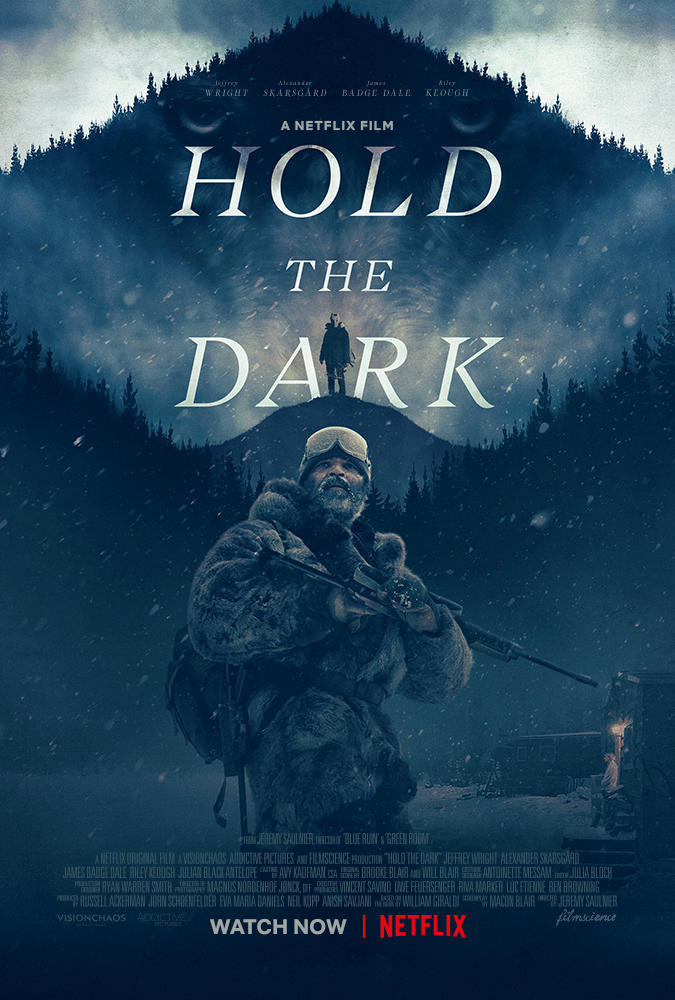
The films viewed were Hold the Dark, a movie or survival and alienation set in the far, frozen North; and Under the Skin, a sci fi flick about an alien femme fatale with a gentler modus operandi than the Predator franchise.

I was tempted to ask what's the point of the movies, but I understand the concept that art doesn't need to mean, just be. Art's existence enlivens the mind and pulls one from boundaries to the unbounded. It expands.

In the two films mentioned, a lot happens--death and destruction, despair and tragedy. However, in the end, I was not left with any sense of wholeness. I did appreciate the craft, but the vision was, as one reviewer wrote, left on the cutting room floor.

I'm not here to bash Netflix, but as the company pours millions into new material, I certainly hope it doesn't end up being a lot of "B" grade material bought on the cheap because it got no traction anywhere else.

And as I write my current short story, I am reminded that although art doesn't have to justify its existence, that's only true when it is existence, when it is the drop of water that reflects the ocean. Without the reflection, the boundaries are too restrictive. I don't want my writing to reflect grey water in a grey world; neither do I want to watch movies where the only color is the grey sheen of lead bullets or the grey grime of roadside snow. Where's the sunshine? It's out there (and in there), and, Lord, let me not be distracted by all the shades and shadows between black and white.

Wednesday, August 8, 2018

Netflix's The Ranch: Exploding the Strong, Silent Male Stereotype

It took my wife and I a while to finally try Netflix's series "The Ranch." We liked and were curious about the cast, a talented ensemble, many of whom we'd seen before on "That 70's Show," not to mention Sam Elliott and Debra Winger. However, the concept of curmudgeonly father and dysfunctional family was not a new premise, and we weren't sure we wanted to once again sit through ludicrous fails at familial harmony. Was that ever really funny? We finally decided to sit down and see if "The Ranch" could pull it off.

It was a while into the series before we noticed that Sam Elliott produced the series, and it was Elliott's character Beau Bennett that first attracted our focus. Beau Bennett is the modern-day version of those characters Elliott played in westerns--right and wrong are clear-cut (and punishment trumps forgiveness), there's no need to discuss something because you either know it or you don't (and if you don't know "it," you're not worth knowing or respecting), and ultimately no one lives up to the standard (which is why they spend most of their lives alone). This last personality trait is what must have inspired the show's theme song to be Willie Nelson's classic "Mothers, Don't Let Your Babies Grow Up to Be Cowboys," who are always alone, even when they're with the one they love.

My wife and I watched the first couple of shows, each episode being a half hour long, in the great tradition of TV sit-coms. We almost stopped at that point because of the excessive bickering within the family. With us, anyway, a little of that goes a long way. Then Ashton Kutchter's character Colt came to the foreground, Kutcher displaying a remarkable ability to move from very real emotion to two-dimensional comic characterizations and slapstick. This is especially true with the interaction between the Bennett brothers, Colt and Rooster (Danny Masterson). What further kept our interest was the inclusion in the series so many members of the cast of the "That 70's Show"; it was interesting watching those actors interact with one another within their new roles on "The Ranch."

The script writing was sharp and lively, especially the ability of the writers to introduce and integrate material for a joke early in a show but not hit the punch line until much later. Script development continually evolved to include more drama, increasing the intensity of interactions between the sons and Beau, and Beau and his wife and later . . . let's call them girlfriends for lack of a better word. For us, Kutcher pulled the show for quite a while, the other characters being foils to Colt's foibles and foolishnesses. Although the cast really has ensemble status with all characters pulling a great share of the emotional load of the series, Kutcher's acting heightened the comedy of Colt's return to his hometown of Garrison, Colorado. His character was the locus, and Kutcher pulled off the highs and lows like a trapeze artist.

The character of Beau Bennett is also a focus for the storyline. He owns the ranch, action focuses on his relationship with his wife and other women, and his sense of right and wrong is the reference point for the actions of the characters. Because of the courage of the series' treatment of the conflicts of the storyline, a great deal of action transforms from comedy to drama, transitions admirably accomplished by the cast. Much of the drama and comedy of the series is derived from the stereotype of the strong, silent male--so aptly portrayed through the years by Sam Elliott's acting. In "The Ranch" we see this stereotype in all its aspects, warts and all. We see its strength in holding up under adversity, and we see its weaknesses in terms of the ability to interact with others as fully realized adults. The male characters here don't get to shoot someone and then ride off into the sunset. They have to talk and share to succeed; they have to forgive rather than judge for the relationships to continue. This dynamic fuels much of the show: both the comedy and the drama. Danny Masterson with great acting precision displays the stereotype at its most two-dimensional worst, walking that knife's edge between hilarity and tragedy within the dysfunctional parameters of his characterization, maintaining just enough good-guy saves to keep his character fresh and believable. The character of Colt is the rebel for the cause of the strong, silent stereotype. He's willing to cry, to wear Uggs, to use hair products. He's willing, again and again, to denounce the myth, and therefore to be the true-to-life version of that stereotype (albeit a comedic version), expanding its boundaries to show that strong and silent doesn't mean rigid and mute.

Even Beau Bennett's character changes, slowly and painfully, and that pain is experienced by Beau (the strong, silent hero tearing up and admitting that he has done wrong) and by his family when his unbending, rigid response to human emotions and frailties causes divorce and ruptures in his closest relationships. The series portrays real human drama in its latter episodes, the drama becoming so intense that the canned laughter at the jokes jarred with obvious artificiality. This was great stuff, superior work by the entire series' production personnel. The last two or three episodes of the fifth part reveal how serious the production was of exploding the myth of the strong, silent male. I'm going to add a spoiler here for analytical support, so those who don't want to know, stop reading.

When Beau denounces Colt as a thief and initiates action that will result in Colt's conviction, I told my wife, "The writers had Beau cross a line here. He's no longer a good guy with flaws. He's a bad guy." Later, Beau is persuaded by his girlfriend Joanna to fix the situation for his son, and Beau bravely and honorably, with understanding and remorse, does so. However, for my wife and me, we were not convinced. Beau states that he will change, that he understands the need to do so. We are not convinced, though. The pain and suffering Beau's rigid self-definition has caused his family is immense. If every dog gets one bite, then Beau's had his. There really isn't any hope, though, that he won't be jarred from sleep sometime and wake up snapping. The success and sweetness of his relationships are due more to others than Beau. He is incapable of catching up and provides too little to late. He even says so when he states that at seventy-two years of age, he doesn't think he can change. The myth of the strong, silent male only works if you (and those within your circle) can stand the pain and isolation

Part 5 ends with hugs between Colt and his dad, but as viewers, we want to tell Colt: "All those denouncements you shouted at your dad, how he always hits the negative--Colt, those were accurate." OK, Colt and Beau hug, but it's as if one of Beau's hands holds a knife, forgotten by both in the fullness of the moment. At some point in the future, Beau will shove that knife into his son's body, either that or the writers will cop out and Beau will mysteriously morph into a different person.

Do my wife and I want to hang around to see the blood and hear the screams? Only if we acknowledge that the show itself has morphed from comedy to horror. "Colt, don't go into the basement with your dad! Don't go down those stairs with him right behind you! Don't, you fool! Don't!"

Thursday, January 4, 2018

Netflix's Bright, Shiny with Hope

One result of being highly visible is that it can make you an easy target. Netflix’s first big movie, Bright, has that distinction. Critics’ reviews are generally dismal: being tagged as the worst movie of the year certainly isn’t an accolade, after all. A mash-up of buddy cops, urban fantasy, and social commentary movie, utilizing a palette of garish colors and heavy-handed brush strokes--I get it. The thing is, my gut reaction is that I just don’t agree. I enjoyed the movie, and no, I don’t think it’s just a case of “that’s to be expected from a shallow guy like you.”

One reason Bright is a significant movie--perhaps the major reason--is that the concept is so captivating, so enchanting. Anyone who has been hooked by the fantasy genre will find that once an epic is completed, the question of “what about two thousand years later?” is a most fulfilling opportunity for speculation. Take The Lord of the Rings saga: it ends with the age of the rise of men. Move that forward to the rise of the age of science and technology, move that forward to an age that includes a modern-age Los Angeles, and a LOTR Middle Earth with Fords, Glocks, and elves and orcs is a rich stew that can be savored over time. Just drop something new into the pot over the days as the stew ages: elves working for the National Park Service or the Sierra Club, dwarves caring for the mountains as agents of the Department of the Interior, races other than men striving to curb the excesses of the Age of Men. 

One characteristic of Bright that is both a strength and weakness, as the movie was created, is that the audience is just dropped into the reality of the movie. The Lord of the Rings movie trilogy contains too-ample summaries of the world of the hobbits--and, what?, maybe four endings? Such a saga needed the footage to tie things up, but . . . On the other hand, we are dropped into the world of Bright, and there are definite WTF? moments where we have to actively work to figure out what’s going on, as best as we can. This is not a bad thing, although it can pull us out of the movie’s reality it we have to work too hard at our figuring. The other side of the coin is represented by the too-obvious moments of commentary on the bigotry towards the orcs, the race that backed the evil sorcerer who lost the magic wars two thousand years earlier. Really, any audience with half a brain won’t need cue cards to figure out the parallels. The questions that arise from the created reality of the movie are a perfect platform for the sequel and perhaps even an eventual TV series. Hopefully in subsequent expeditions into this reality, the franchise will be able to develop the intriguing questions that arise without being too obvious and insulting the intelligence of the audience.

Another love/hate aspect of Bright is the acting of the two main characters--Will Smith as the experienced human cop, and Joel Edgerton as the orc rookie cop. Smith plays the character we’ve seen before, as in Bad Boys, and provides his usual polished performance, yet we don’t really see anything new. It’s Will being Will, just as we’ve seen so many movies where Clint Eastwood was just doing his Clint thing. I think Will Smith was capable of moving into new territory within the experienced-cop characterization, but the interaction of writer, director, and actor just didn’t bear any new and exotic fruit. We got the old standby, which was good, no complaints, but also no real opportunities to shout Wow! out loud. Edgerton, on the other hand, was much fresher in his portrayal of the orc rookie seeking to make his place and to find himself. It’s ironic that Smith was the big name for the movie, yet his character was in many ways the supporting foil for Edgerton’s. That was a surprise and real plus for the movie.

The critics' analysis of the movie has been--if you’ll pardon the expression--fast and furious, which has been all to the good. Hopefully, the Urban Middle Earth reality of Bright can be more intelligently and adroitly explored in the upcoming sequel. Maybe the two cops can take a trip to the Sierra Nevadas, Smith with his family and Edgerton with a girlfriend. Maybe they can meet some old-school elves and dwarves. Maybe they can hear a prophesy, renounce it, and then discover that renunciation is only affirmation, new age style. Maybe we’ll experience the magic of a world awful in its possibilities made bright with the reality of rebirth, resurrection, and renewal. Everybody hopes so . . . so, Netflix, whatya gonna do?


Thursday, August 6, 2015

Movie Review: The Expendables 3

Just viewed The Expendables 3, and I can remember the entire script even after only one watching.

"He's one of us. We gotta break him out. You in?"

"Yo."

(15 minute action sequence. Things blow up.)

"We gotta new job.  Got your guns?"

"Yo."

(30 minute fight sequence. Things blow up.)

"The bad guy . . . ain't he supposed to be dead?"

"He needs to be. Let's do it."

(30 minute fight sequence. Things blow up.)

"That SOB's got half our team. We gotta get 'em back. You with me?"

"Yo."

(45 minute action fight sequence. Things really blow up.)

(Denouement: a bar. Drinking. Man hugs--even from the women woman. Vocalizations that resemble human speech. Credits.)

It's OK to mute this movie if things blowing up get too loud. Any dialogue you imagine will probably be better than the original. Or you can just read lips. Yo.

Wednesday, March 18, 2015

Sons of Anarchy: Over 60 Hours of Tragedy

It's gripping, it's addicting, it's tragic, it's FX's series Sons of Anarchy.

Loosely based on Shakespeare's Hamlet, Sons of Anarchy is about Jax Teller, the "prince" of the motorcycle club Sons of Anarchy, trying to deal with the problems of his kingdom: his father's death, his mother's moral ambiguity, and his own life's path.

The production, direction, casting, and acting of the series is a black hole of entertainment that produces a gravitas that cannot be denied or resisted. One cares for the principal characters; one appreciates the unfoldment of the flaws and strengths of the "crew"; one wallows in the dark humanity of the series, hoping and praying for light.

The sun does not break through the clouds of violence and despair.

The classic purpose of tragedy is for the audience to experience a tragic hero's attempt to rectify his screw-up, to heal his tragic flaw, and to purge the kingdom of the "rot" that he has created. Sons of Anarchy fits this mold, with Jax Teller's attempt to break free of the motorcycle gang's evil ways and to follow the vision of his dead father. Jax is the Hamlet of the series, the son of the gang's founder. There is a Claudius, a Gertrude, an Ophelia, a Polonius, a Fortinbras, and a "Ghost" of the father presented as a journal that Jax finds. A sense of fate and a subtle sense of the supernatural flavors the series.

In tragedy, the audience is supposed to leave the theater purged of dark emotions, having experienced a catharsis and realizing that one must be a better person, live a better life, and leave a better mark upon the world. This is the playwright's challenge, to cleanse the audience with a bitter brew of one afternoon's or evening's partaking. "I can do better, be better," thinks the audience upon leaving the theater, the stage littered with bodies.

After 60 hours of hoping the characters in Sons of Anarchy would get it right and extricate themselves from a morass of violence and deceit, when that doesn't happen, the end result is not rebirth but depression. In the end, even though this series is done so well, my cathartic realization was that 60 hours of tragedy was not a "purging of the emotions or relieving of emotional tensions." Rather, viewing such suffering and failure for such an extended time causes its own sorrow.
Suit the action to the word, the word
to the action; with this special observance, that you
o'erstep not the modesty of nature: for any thing so
overdone is from the purpose of playing, whose end,
both at the first and now, was and is, to hold, as 'twere,
the mirror up to nature; to show virtue her own feature,
scorn her own image, and the very age and body of
the time his form and pressure.
     Hamlet, Act 3, scene 2
My thanks to Kurt Sutter, the show's creator, executive producer, writer, and director. I do want to be a better person. Mostly, though, I just want to avoid watching the long-suffering of extended tragedy that such a series as Sons of Anarchy brings.

Copyright 2015 by Thomas L. Kepler, all rights reserved

Saturday, June 21, 2014

Movie Review: World War Z

A zombie that is dead can't be infected.

Brad Pitt is trying to save his family from a zombie pandemic that is sweeping the world. Once bitten, in twelve seconds the victim is a zombie. This leads to some powerful visuals of the infection spreading, but even a slight sense of scientific skepticism casts a pall on the reality-building efforts of the production.

However, it being a rainy day and I being somewhat tired, I persevered and finished the movie.

The best moments are the narrow escapes and the brave few who hold out against overwhelming swarms so that the even fewer might escape and perhaps endure. Brad Pitt's character is one lucky dude, escaping attack after attack in his world-spanning search for a "zombie solution." Meanwhile, small enclaves hunker down, stay quiet, and hope the zombies stay "dormant," which shouldn't be too hard for the undead, especially since they don't seem to feed.

Let's see--dead but animated, energy out but no energy in, can't get sick but keep on kickin' . . .  A science-based "solution" doesn't seem to be the best way to end this movie, but with a willing suspension of disbelief, one can at least sit back and watch characters prevail (for mankind), characters in the end a lot more lucky than the actors portraying them.

I've been trying to be reasonable, though, and I guess the real truth is this: what am I doing trying to apply reason to a zombie movie? I might as well try, when the sun sets, to keep the vampires at bay by converting my house's lights to  full-spectrum lightbulbs. Makes sense, but, hey . . .


Copyright 2014 by Thomas L. Kepler, all rights reserved

Tuesday, December 31, 2013

It's Always Good to Start the New Year with a Laugh

It's always good to start the new year with a laugh.

And it my case, I'm also starting it with a one-month free trial of Netflix.

Signed up, Netflix asks you to rate movies you've viewed in order to provide data for the company's software to recommend movies from their catalog. I did this--this one's a three, that one's a four, and so forth, out of five stars possible.

The day moves on to evening, and I'm sitting on the floor, my laptop connected to our flatscreen TV via a HDMI cable. Demonstrating how to connect the flatscreen to the computer, how to open Netflix, and the cinema I'd added to my "list," I then scrolled down to "Our Recommendations for Thomas" to show my wife this function of the website.

And there is was--having crunched the numbers of my movie evaluations, Netflix told me that it was four-stars-out-of-five certain that Leave It to Beaver was a show I'd really like!


Now, I have nothing against Leave It to Beaver or The Andy Griffith Show or McHale's Navy, but my personal perspective on those shows is "been there, done that."

I haven't heard my wife laugh so completely in a long time, and even though I was somewhat nonplussed, soon I was laughing along with her. We started wondering how the recommendation arose. Did some young hotshot programmer think, "Yeah, he's over sixty, so he'll eat up that old-show stuff." Maybe the thinking is to throw in some leftfield possibilities "and see how he reacts."

Later, when reviewing more shows on Netflix's "personalizing" page, the pop-up mentioned that the site will "get better" at recommending shows for me as I continue to rate more and more titles.

I hope so.

I plan to keep my sense of humor, and we'll see at the end of our free month whether we keep our subscription. Maybe a chance for good laughs is worth $7.99 a month.

Copyright 2013 by Thomas L. Kepler, all rights reserved

Sunday, May 19, 2013

The Quiet Man, a movie review

Having been away from home and my wife for three weeks, I was looking forward to watching John Ford's The Quiet Man.
John Wayne gets to show his more sensitive self, Ireland shows its green--welcome after the early Mediterranean browns of California's spring rather than the green spring of Iowa. Maureen O'Hara gets to show her feisty self to best advantage . . .

And I was moved by Wayne's interpretation of fighter Sean Thornton who has vowed to keep his fists out of the fight. And I did enjoy the green fields heavy with recent rain. (The Quiet Man was the first American major film to have footage shot in Ireland.) Maureen O'Hara was the "fiery Mary Kate," damned if any man was going to tell her what to do and damned if she would love any man who wouldn't and couldn't.

It was the stereotypes that got to me: men violent to women and brawling as a pastime; drunkenness as a national pastime; smoking as the essence of virility. After a while, I had to enjoy the film in spite of its assumptions.

This film was released in the year of my birth. Thank god my growth and my generation's was away from many of the social beliefs of that time. We are a diverse world, and I'm glad to have that understanding as part of who I am. The Irish aren't all drunken brawlers any more than all Americans are violent, gun-packing mobsters.

The movie, though, has its sweet and humorous moments--it's just too bad that when Sean Thornton, aka John Wayne, finally has his epiphany, the resolution of the conflict is determined by who is the best brawler and boozer. With Irish music in the background.

And, yes, I did cry at times during the flick. I really miss my wife.

Copyright 2013 by Thomas L. Kepler, all rights reserved

Tuesday, January 8, 2013

Temple Grandin: a movie review

We each see the world in a unique manner because of our individual physiologies and experiences. 

It may appear that we all perceive the same world, but similarities in perception only mask our individual perception. Unless we were to perceive the world from that unified field of consciousness that is the alpha and omega of existence, then we are all living, breathing exponents of the one and only this-is-what-I-see.

Voice is that aspect of writing that attests the uniqueness of our vision and the need to find words to convey the utterly new and grand beauty of individual expression. The best cinematographic representation of the need to allow our individual vision of the world its voice is the 2010 movie Temple Grandin.

Temple Grandin was the winner of the 2011 Golden Globe award for the best performance by an actress in a mini-series or a motion picture made for television. (Claire Danes starred in the title role.) The movie also won another 25 awards and was nominated for an additional 21. The IMDb storyline is below.
Biopic of Temple Grandin, an autistic woman who overcame the limitations imposed on her by her condition to become a Ph.D. and expert in the field of animal husbandry. She developed an interest in cattle early in life while spending time at her aunt and uncle's ranch. She did not speak until age four and had difficulty right through high school, mostly in dealing with people. Her mother was very supportive as were some of her teachers. She is noted for creating her 'hug box,' widely recognized today as a way of relieving stress in autistic children, and her humane design for the treatment of cattle in processing plants, which have been the subject of several books and won an award from PETA. Today, she is a professor at Colorado State University and well-known speaker on autism and animal handling.
The true genius of this HBO production is how the film moves the viewer to see the world as Temple sees it and then moves the viewer to realize and embrace that vision. I also appreciated the opportunity the filmmakers gave me to discover Temple's world and its humanity. The movie is understated, not preachy; it leads us to the door but does not push us through.

The taglines for the film are "What made her different made her exceptional" and "Autism gave her a vision. She gave it a voice."

Those sentences are abstractions of the reality that the movie so compellingly presents. That reality, the actual Temple Grandin, interacted with the director and cast in the making of the movie. She is a noted scientist, author, education, and spokesperson for autism.

Temple Grandin
Ruth C. Sullivan, one of the founders of the Autism Society of America said that when "Temple first addressed an [ASA] audience... people were standing at least three deep... The audience couldn't get enough of her. Here, for the first time, was someone who could tell us from her own experience, what it was like to be extremely sound sensitive ('like being tied to the rail and the train's coming')... She was asked many questions: 'Why does my son do so much spinning?' 'Why does he hold his hands to his ears?' 'Why doesn't he look at me?' She spoke from her own experience, and her insight was impressive. There were tears in more than one set of eyes that day... Temple quickly became a much sought-after speaker in the autism community."  (from the foreward of The Way I See It, Temple Grandin)

My tagline for the movie Temple Grandin is "Autism is a real-life experience, not a medical label." Experience a flavor of that reality by watching the film. It will change how you see the world.

Copyright 2013 by Thomas L. Kepler, all rights reserved

Tuesday, July 10, 2012

The Amazing Spider-Man (2012): What Makes This One Different?

I'll be honest. I like the earlier Spider-Man movies with Tobey Maguire and Kirsten Dunst, so I guess I'll just have to say that I really like The Amazing Spider-Man with Andrew Garfield and Emma Stone.
 "Like most teenagers, Peter is trying to figure out who he is and how he got to be the person he is today. Peter is also finding his way with his first high school crush, Gwen Stacy, and together, they struggle with love, commitment, and secrets. As Peter discovers a mysterious briefcase that belonged to his father, he begins a quest to understand his parents' disappearance - leading him directly to Oscorp and the lab of Dr Curt Connors, his father's former partner. As Spider-Man is set on a collision course with Connors' alter-ego, The Lizard, Peter will make life-altering choices to use his powers and shape his destiny to become a hero." (Written by  Nicky Mitchell  at IMDb)
In the earlier Spider-Man movies, the action and teen drama are balanced to create that special Spider-Man ambiance of teen versus them. I think Spider-Man 2012 captures it better. The earlier Spider-Man movies viewed teens from an adult perspective, where The Amazing Spider-Man sculpts dialogue and action more from a teen perspective.
  • The pace of teen confrontation moves quickly; in fact, all the high school scenes capture that sudden, emotion-infused moment.
  • The dialogue is believable with a great deal being said with a few words, some muttered, facial expression and body language: an entire world-view expressed with a shrug, a sneer, or a handful of words.
  • Adult-teenage interactions involve as much walking away as heart-to-hearts. It's difficult for Peter Parker to express what he's feeling.
  • The teenagers are more unpredictable, more mercurial in the 2012 movie--personalities in transition, out-pacing the understanding of the teens themselves.
  • Technology is a part of the landscape. Even while suited up, Spider-Man's got to answer his cellphone. Science and technology seem to fit more seamlessly into the new movie's plot, too.
Another strength of the movie was character motivation. The fact pace of the movie provided an understanding of character action without scenes becoming maudlin. I thought at first that actress Emma Stone as the girlfriend was too old for the Andrew Garfield Spider-Man. However, we then meet the girlfriend's dad (Denis Leary)--and that explains a lot. The antagonist Dr. Curt Connors is a haunted man with a need, and that character is nailed by actor Rhys Ifans. Uncle Ben and Aunt May, played by Martin Sheen and Sally Fields, provide credibility, and Fields makes excellent use of her greater screen time to say volumes with facial expression.

A lot has to be given to director Marc Webb and screenwriters James Vanderbilt, Alvin Sargent, and Steve Kloves. The teen years are a tangled web, and this movie delightfully snares us, heart and soul.


Copyright 2012 by Thomas L. Kepler, all rights reserved

Thursday, June 28, 2012

Extremely Loud & Incredibly Close: movie review

Young Oskar Schell has two missions in life and one strategy: find the owner of a key whose name is Black. That will help him deal with his 9/11 experience and also find the lock that fits a key.

Anyone who has had some interaction with someone who exhibits Asperger's Syndrome characteristics will appreciate Wikipedia's definition: "an autism spectrum disorder (ASD) that is characterized by significant difficulties in social interaction, alongside restricted and repetitive patterns of behavior and interests." An article about Asperger's that is more accessible (and vetted for accuracy) for those with learning disabilities is available at DOPA, "Asperger syndrome."

If you are not familiar with this syndrome, you may have the reaction of one IMdb reviewer, Otisburgh, regarding the main character of the movie Extremely Loud & Incredibly Close, a young boy played by actor Thomas Horn: "His character was not likable at all - he was rude and weird, and not in a good way."

Director Stephen Daldry elicited from young Thomas Horn a realistic portrayal of the behavior exhibited by someone skirting along the edge of the autism spectrum. Portraying the parents of young Oskar are actors Tom Hanks and Sandra Bullock, who catch the realism of their parenting situation: that to deal with Oskar's behavior is to acknowledge the reality of that behavior. The added drama is that Oskar's behavior includes a reaction to the 9/11 tragedy.
"A troubled young boy, Oskar, is trying to cope with the loss of his father. Oskar starts lashing out at his mother and the world. Until a year later, he discovers a mysterious key in his father's belongings and embarks on a scavenger hunt to find the matching lock, just as he used to when his father was alive. On this journey he is bound to meet a lot of people and learn a lot about himself and his family, but will he ever find the lock?" --from IMdb, written by Koro   
The structure of the plot is episodic, with the protagonist interacting with a series of characters and environments in his attempt to solve the mystery of a key that belonged to his father. Along the way he meets a spectrum of humanity--that mystery Oskar finds so challenging--and learns from his experience. Included among his introductions are characters played by Viola Davis (2012 Oscar Nominee) and Max von Sydow (Oscar Nominee, 2012 and 1989).

I understand and applaud the Academy Award 2012 nomination of Extremely Loud and Incredibly Close for best picture. The movie walks a tightrope between realism, the archetypal journey to self-awareness, and the unconditional love of parents. Some viewers may think the movie slips the tightrope and plummets to its demise. I'm with those who feel the movie makes it to the other side--and that the story takes me along, too, a better person for the experience.

Copyright 2012 by Thomas L. Kepler

Thursday, June 21, 2012

The Avengers: movie review

image from IMdb
My family on Father's Day took me to the movies to watch The Avengers--and it was a great gift and movie.

Here are the Marvel Studios movies I seen, based on the comic book characters:
  • The Incredible Hulk (2008)
  • Iron Man (2008)
  • Iron Man 2 (2010)
  • Captain America, the First Avenger (2011)
  • Thor (2011)
Here is the storyline: "Nick Fury is director of S.H.I.E.L.D, an international peace keeping agency. The agency is a who's who of Marvel Super Heroes, with Iron Man, The Incredible Hulk, Thor, Captain America, Hawkeye and Black Widow. When global security is threatened by Loki and his cohorts, Nick Fury and his team will need all their powers to save the world from disaster." ( Written by Wellard Rockard, from IMdb

Of these, I found the first Iron Man the best, although, ironically, in 2010 I wrote two blog posts on Iron Man 2, a review and the back story to the tale. (Good news, I hope: Iron Man 3 will be out in 2013.)

The Avengers, for me, was a vindication of all the other Marvel movies that came across like . . . well, like comic book caricatures.

Probably a lot of credit goes to director Josh Whedon, who also helped pen the script. In The Avengers, the characters and their personalities and issues are not overshadowed by the plot. The plot allows the reader to connect. For instance, at one point in the movie, Tony Stark is challenged with the "Who do you think you are?" question. His response is "Genius billionaire playboy?" Right in character. At another point in the story, Iron Man is knocked flat by the antagonist, Loki. His aside is "I'm fighting a demigod," acknowledging the incredible nature of the universe and adding to the credibility of the moment. Or this (from IMdb): Steve Rogers: "Is everything a joke to you?" Tony Stark: "Funny things are." For an interview with director Josh Whedon and Tom Hiddleston (Loki), go here.

The other Avengers and supporting characters come to life in the movie:
  • Thor, who understands and cares more for humanity than is displayed in Thor
  • Captain America, whose focused sincerity is balanced with a little attitude
  • the Hulk, whose focused anger is balanced with a little humor
  • the Black Widow, a "Jason Bourne" with lipstick and leather
  • Hawkeye, whose archery skills provide some excellent moments
  • Nick Fury, larger-than-life commitment channeled with believable intensity
  • Agent Phil Coulson, the human-sized foil to all the super-heroes
  • Selvig, with a great mad, mind-controlled scientist moment
Let's personalize the story's conflict with a quote from Loki's partner-in-evil The Other: "The Tesseract has awakened. It is on a little world. A human world. They would wield its power, but our ally knows its workings as they never will. He is ready to lead. And our force, our Chitauri, will follow. The world will be his. The universe yours. And the humans, what can they do but burn?" (IMdb)

The casting for the film was excellent. Robert Downy, Jr., as usual was at his mercurial best. Scarlett Johannson carved out a physical presence yet still maintained a feminine believability. Samuel Jackson was able to make his Nick Fury persona a wonderful blend of cartoon caricature and three-dimensional patriot. Action and special effects do not overshadow the human elements of the film.

I leave you with the trailer . . . and happy, heroic trails to you.


Copyright 2012 by Thomas L. Kepler, all rights reserved

Tuesday, May 22, 2012

Peter Jackson's The Hobbit

from IMDb
 OK, just watch the trailer.


 Now that we've got your attention.

Even though the book The Hobbit precedes The Lord of the Rings, it appears in the trailer that Peter Jackson includes hints of what is to come in his movie version. This will, I suppose, create all these ties to the movie for fans who saw the trilogy first. I think this could be exciting.

Production still from The Hobbit: an Unexpected Journey
Here is the link to The Hobbit Blog, the official site.

And here is some commentary from the writer Aidy from the blog Aidy Reviews.
The screenplay for The Hobbit is written by Fran Walsh, Philippa
Boyens, Peter Jackson, and Guillermo del Toro, adapted from J.R.R.
Tolkien’s famous novel. The quest written by one Bilbo Baggins, a shire
loving Hobbit, who was whisked away on an adventure by the wizard
Gandalf , who tricked Bilbo into hosting a small party for 12 dwarves
who take Bilbo deep into the Misty Mountains, where he encounters the
creature Gollum, and finds the mysterious “one ring,” that is the focus
of The Lord Of The Rings tale.

The trailer serves as a long-awaited preview of what’s to come in the
movie—movies, I should say, Jackson decided to stretch the film into two
movies which gives them the opportunity to bring in some unique materiel
that’s not in the original Tolkien’s books. But what he is doing here is
this:  he’s giving fans of The Hobbit and LOTR series a broader
perspective of middle earth, by bringing in more visuals, landscapes,
and characters. You can see a little bit of this in the trailer. Also,
in the trailer you see the elf Galadriel (Cate Blanchett), who is one
of the featured characters in The Lord Of The Rings book trilogy– she
is not in the original tale of Tolkien’s The Hobbit.

In the book and as it will be in the film, the wizard Gandalf (Ian
McKellen), disappears to participate in the White Council meetings–the
film will make note of those events. Also you see the “younger” Bilbo
Baggins (Martin Freeman), and a descriptive montage of his dwarven
companions–eager to reclaim the treasure the dragon Smaug stole. Even
more intriguing is that you will see and hear the song–poem about the
“Misty Mountains” being sung; however, what you do not see, is the
highly anticipated view of the dragon Smaug.  We also get to see and
hear, the creature Gollum (Andy Serkis), deep in the dark cave of the
Misty Mountains, where Bilbo finds “the One Ring.”
 Copyright retained by the respective sites linked to.